
Kwelera National Botanical Garden takes shape
We’re standing in the middle of a wetland deep in the cultivated portion of the Kwelera National Botanical Garden. But there is no water, just a thick covering of invasive solanum, ready to suck up any moisture that makes its way here.
There, near the boundary, Expanded Public Works Programme employees are removing alien and invasive vegetation. They work systematically, and soon, they will be here, removing the nasties one by one.

Back to nature
When the rains come, this wetland – and several others here – will fill again, indigenous water-loving plants will thrive again, birds and animals will drink here again, and people will rest here, close to nature. The garden managers will feed water run-off to these wetlands, too.
If there are no unforeseen delays, the Kwelera National Botanical Garden, this green jewel, could welcome its first visitors in just 18 months.
The South African National Biodiversity Institute (SANBI) has appointed a contractor to build a visitors’ centre, gatehouse, staff facilities and roads, install bulk electrical services, and – at last – landscape this almost 10.5-hectare portion. All that is awaited now is the granting of a water use licence.

It’s happening
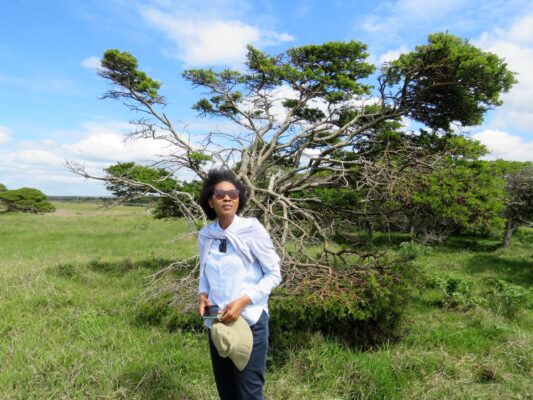
The sigh of relief from Nomama Mei, the curator of the garden, is audible even though she is standing about 10 metres from me. “It’s happening,” she says. “Seven years after proclamation, it is happening. We can see it taking shape.”
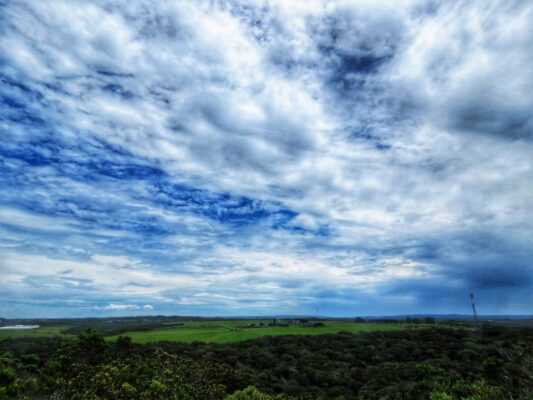
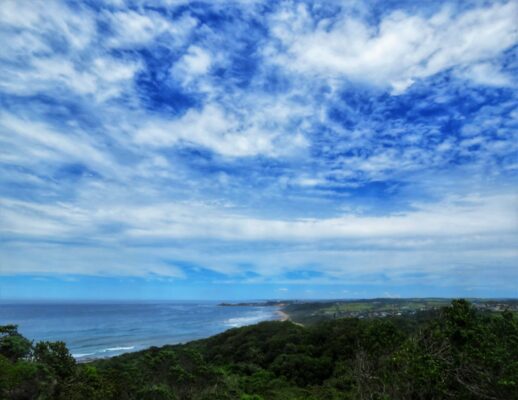
I can hear her over the roar of the sea, a constant from the other side of the massive coastal dune forest, and I can hear her over the west wind whipping over us. “We will plant a windbreak of indigenous trees,” she says.
“We’ll move the nursery over there,” she points towards the sea-facing boundary fence. The fledging nursery is growing rapidly at the garden’s temporary admin offices close to the Kwelera River.

A mature backbone
My favourites in this garden now are the stands of flat-topped thorn trees – they are Acacia karroo, Nomama tells me. These trees will stay, standing guard at the entrance and scattered in their colonies throughout. “I love their canopy, their shape,” Nomama says. “These trees were here before us; they bring some maturity to this young garden.”
Picture it. Themed beds will weave around these trees, highlighting the biomes of the Eastern Cape. A garden for people who are blind will offer plants of fragrance and texture. A wedding area will boast what Nomama calls “show-off” plants, great for photo backdrops. A garden of Kwelera will showcase what is in the dune forest, and a medicinal garden will showcase plants indigenous to the Eastern Cape. That’s among other things, like a restaurant, herbarium and displays of garden art.
A ripple of benefits
Outside the landscaped area, the garden stretches over 160 hectares, once known as the Kwelera Nature Reserve, snaking from the Kwelera River, around the villages of Kwelera Mouth, Sunrise-on-Sea and Rainbow Valley to edge the Gonubie River.
This is South Africa’s 10th national botanical garden and the first in the Eastern Cape. It’s the first to include coastal and riverine aspects.
Its development can only be a very big thorn for the poachers of plants, animals and sea-life, who seem to have operated fruitfully in the area.
The Eastern Cape is one of South Africa’s least-resourced provinces – many people are poor, in other words – and there is real promise that the garden will bring solid income-generating opportunities for local communities, who will also benefit from more conservation awareness. By attracting eco-tourists, the garden is very likely to raise revenues for the broader Buffalo City and the province.
It’s a lot better than another townhouse development or three, I say.
Wildlife is welcome
Human visitors to the garden will be able to take a walk into the coastal dune forest – designed for maximum experience of the majesty of the forest and minimal disruption – up Magoza Hill. This pristine forest is rich with groves of milkwood and erythrina. Orchids cling to the trees.
And in this garden, wildlife is welcome. “This is their home,” Nomama says.
If you look closely, you will see strategic openings all along the base of the fence: this is to allow small mammals, like hare and genets, to move freely. There will be no fences along the forest. “The buck and porcupine must be able to come and go as they always have,” she says.
“It may not always be the best thing for the plants,” she laughs – and gardeners of the area will tell you about their fabulous “problem” of bushbuck eating their plants. “But it’s the best thing for diversity.”
Camera traps in the forest have confirmed sightings of caracal, she tells me and then shows me a video.
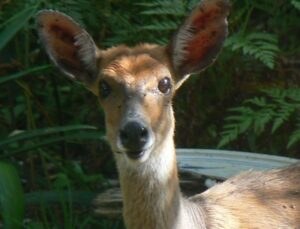
As we stroll back to the entrance, we spot three bushbuck at the forest edge, snacking contentedly. It is the way it is meant to be, naturally.


Beautiful article , thanks so much for putting us on the map.
Our coastal areas need more sensitive planning and implementation of conservation measures. Kwelera National Botanical Garden is leading the way.